Inches from Pay Dirt: The Cruel Math Behind NFL Offenses That Can't Close the Deal
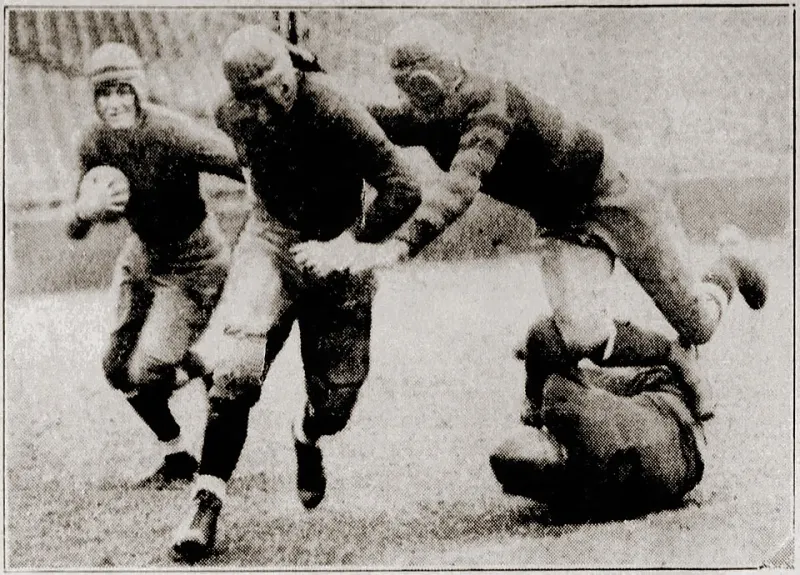
Photo: Unknown, Public domain, via Wikimedia Commons
There's a particular kind of agony that NFL fans know all too well. Your offense rips off a 40-yard gain, the crowd goes electric, and suddenly your team is knocking on the door — first-and-goal from the eight. Four plays later, your kicker is trotting out for a chip-shot field goal, and the sideline looks like someone just canceled Christmas.
This isn't a random occurrence. It's a pattern. And it's happening to some of the most statistically dominant offenses in the league.
Welcome to the red zone paradox — the place where yards-per-play leaders become conversion-rate laggards, where quarterback ratings dip, and where coordinators who looked like geniuses all game suddenly start second-guessing every call.
The Numbers Don't Lie (But They Do Surprise)
Here's the thing about red zone efficiency: it doesn't always correlate with overall offensive output the way you'd expect. Some teams that rank in the top five in total yards gained per game hover around the middle of the pack — or worse — when it comes to converting red zone trips into touchdowns.
Across recent NFL seasons, the league average for red zone touchdown conversion sits somewhere around 57-60 percent. That sounds decent until you realize that the best teams in the league are pushing 70 percent or higher, while the worst are stuck below 50. That gap doesn't just affect win totals — it can be the difference between a first-round bye and watching the playoffs from your couch.
The math is brutal and simple: if a team averages four red zone trips per game and converts at 55 percent instead of 65 percent, that's roughly 0.4 fewer touchdowns per game. Over 17 games, you're looking at nearly seven missed touchdowns — potentially 49 points left on the field. That's not a rounding error. That's a season.
Why the Field Gets Smaller (And Defenses Get Smarter)
The most obvious explanation for red zone struggles is also the most underappreciated: the field compresses, and defenses love it.
Out in the open field, a dynamic offense has sideline-to-sideline space to exploit. Motion, pre-snap shifts, and route combinations can stress a defense horizontally and vertically at the same time. But inside the 20, that horizontal space evaporates. Defenders don't have to respect the deep ball the same way. Corners can press with the end zone as a natural bracket. Safeties can crowd the line without worrying about getting burned over the top.
Coordinators like to call this "shrinking the window" — and elite defensive coordinators spend serious prep time designing red zone packages specifically to take away a team's best plays. That crossing route that's been open all game? Suddenly there's a linebacker sitting right in the throwing lane. That tight end seam? The safety is already shading inside at the snap.
This is why teams that feast on big plays in the open field sometimes stall inside the 20. Their explosive plays depend on space, and the red zone is the one place on the field where defenses can legally take that space away.
The Psychological Weight of "Just Score"
Statistics only tell part of the story. Talk to offensive linemen, skill players, or quarterbacks who've been through red zone slumps, and a different theme emerges: the pressure of proximity.
When you're on your own 35 trying to move the chains, the stakes feel manageable. But when you're at the five-yard line with a chance to take the lead in the fourth quarter, the mental weight shifts dramatically. Play-callers start overthinking. Quarterbacks feel the urgency to force something. Offensive linemen, sensing the moment, sometimes get too aggressive and draw penalties at the worst possible time.
This is the paradox in its purest form — the closer you get to the goal line, the harder it becomes to think clearly and execute with the same rhythm that got you there. Teams that solve this problem tend to have one thing in common: they treat red zone situations in practice with the same game-speed intensity as any other part of the field. They script red zone scenarios, rep goal-line packages obsessively, and build a muscle memory that kicks in when the moment is biggest.
Case Studies: Who Figured It Out, and Who Hasn't
Look at the Kansas City Chiefs during their championship runs. One of the reasons Patrick Mahomes and Andy Reid's offense has been so hard to beat isn't just the YAC monsters and the fourth-quarter comebacks — it's that their red zone conversion rate has consistently ranked near the top of the league. They use creative formations, hybrid tight ends, and pre-snap motion to create leverage before the snap even happens. By the time the ball is snapped inside the 15, they've already identified the coverage and picked their spot.
Contrast that with teams that have loaded up on speed receivers and spread concepts — offenses that look unstoppable between the 20s but become one-dimensional in tight quarters. Without a reliable power run game or a big-bodied tight end who can win contested catches near the goal line, those offenses essentially bring a knife to a gun fight once the field shrinks.
The San Francisco 49ers under Kyle Shanahan offer another instructive example. Their run-heavy, play-action system actually becomes more effective in the red zone because the threat of the run forces linebackers to commit, which opens passing lanes that don't exist in traditional spread concepts. Shanahan has consistently built offenses that are specifically designed to be lethal inside the 20 — not just in the open field.
The Field Goal Trap
There's also a strategic dimension worth unpacking: teams that struggle in the red zone often develop a quiet cultural habit of "settling" for field goals. Coaches, burned by turnovers near the goal line, start calling conservative plays to protect the ball. Kickers get more reps. And gradually, the offense stops expecting to score touchdowns in those situations — they start expecting to kick field goals.
That mindset shift is insidious. A team that kicks field goals instead of scoring touchdowns doesn't just lose seven points per trip — they potentially change the entire complexion of a game. You're putting pressure on your defense to hold, extending games that should be put away, and handing momentum back to an opponent that should be on the ropes.
The best offensive coaches in the business refuse to let that culture take hold. They're aggressive in the red zone almost to a fault, because they understand that the long-term cost of timidity is higher than the short-term risk of a turnover.
What Separates the Closers
At the end of the day, red zone efficiency is one of the most revealing stats in football because it strips away the glamour. You can't hide behind big plays or garbage time yardage. Inside the 20, it's about execution, intelligence, and the willingness to do the unglamorous things — block through contact, fight for a yard, make the safe throw when the defense takes away your first read.
The teams that consistently convert? They've made finishing a part of their identity. They practice it, they talk about it, and they hold each other accountable for it.
The teams that don't? They keep watching field goal attempts sail through the uprights, wondering why a drive that started with so much promise ended with three points and a quiet sideline.
In a league where every play matters, the red zone is where teams prove whether they're built to win — or just built to move the ball.