All That Yardage, Nowhere to Go: The Brutal Truth About Elite Offenses Inside the 10
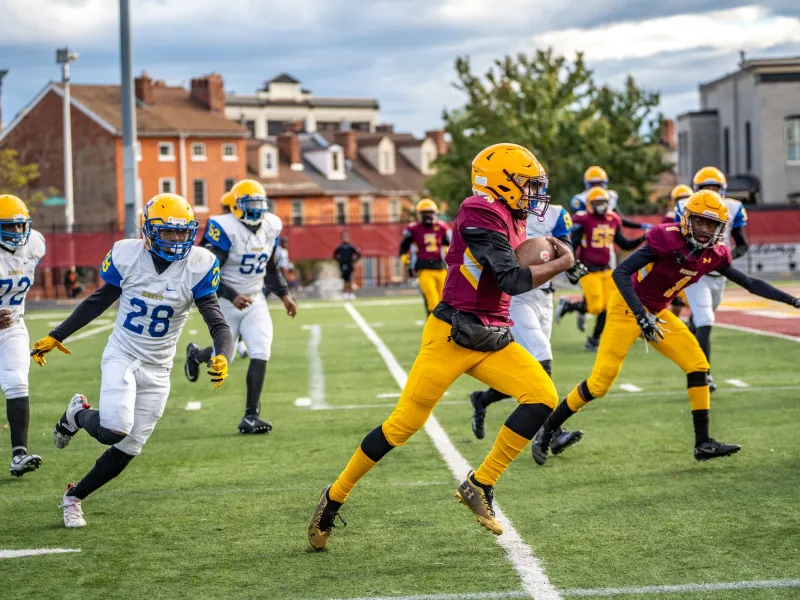
There's a particular kind of agony that NFL fans know all too well. Your team's offense has been a wrecking ball all drive long — crisp routes, a quarterback threading needles, receivers doing damage after the catch. Then the ball crosses the 10-yard line, and something shifts. The energy changes. Three plays later, the kicker is trotting out for a field goal, and everyone in the stadium is doing the math on what could've been.
This isn't a fluke. It's a pattern. And it's happening to some of the most statistically impressive offenses in the league.
The Geometry Problem Nobody Wants to Talk About
Here's the thing about elite passing games: they're largely built on space. Spacing routes, crossing patterns, mesh concepts, the deep shot that stretches a defense vertically — all of it depends on field real estate. When your offense is operating between the 20s, you've got roughly 60 yards of breathing room. Defensive backs can't cheat too hard toward any single receiver because there's just too much ground to cover.
Cram everything inside the 10-yard line and that equation flips completely. Suddenly, the field is roughly 10 yards deep and 53 yards wide. Corners can press with confidence because there's no threat of getting beaten over the top. Safeties can crowd the box without worrying about a post route splitting them in half. The same spacing concepts that looked unstoppable at midfield now have receivers bumping into each other before they can even break into their routes.
It's not that the offense got worse. The field just got smaller, and the defense got a whole lot cheaper to run.
How Defenses Flip the Script at the Goal Line
Coordinators around the league have spent years building specialized goal-line packages specifically designed to neutralize pass-heavy attacks. When they see a team driving into the red zone, many will shift to a heavier personnel grouping — think three or even four down linemen, an extra linebacker or two, and tight man coverage across the board.
This does a few things simultaneously. First, it takes away the underneath throws that spread offenses thrive on. Second, it forces quarterbacks into tighter windows on deeper routes — except those deeper routes now end in the end zone, meaning any incompletion is a failed opportunity rather than a manageable third-and-six. Third, the added bulk up front creates a physical mismatch that pass-first teams simply aren't built to handle on a snap-by-snap basis.
Some defenses get even more creative. Bracket coverage on a team's top receiver, a defensive end who drops into a shallow zone to take away the quick slant, a linebacker who shades the tight end to eliminate the seam route — these wrinkles cost almost nothing in terms of roster investment but can completely neutralize an offense that hasn't done its homework.
The Play-Calling Trap
There's a psychological dimension to this that doesn't show up in any box score. Offensive coordinators who've built their identity around the passing game can fall into a stubborn loop when the red zone stalls start piling up. The natural instinct is to trust what got you there — keep throwing, keep spreading the field, keep doing what's been working all season.
But the defense is counting on exactly that predictability.
The best red zone offenses in recent memory — think the Kansas City Chiefs at their peak efficiency, or the Philadelphia Eagles when they were running the RPO game to perfection — have had a critical trait in common: they weren't afraid to completely abandon their identity when the field shrank. They'd go heavy, pound the ball, use play-action off of run looks, or dial up a bootleg that put the quarterback on the move in space.
Teams that refuse to make that mental pivot are essentially handing the defense a scouting report before the snap. And defenses at the NFL level will absolutely take advantage of that.
When the Numbers Lie
One of the most misleading stats in football is yards per game. A team can rank top five in total offense and still be a below-average red zone unit — and that gap tells you almost everything about how sustainable their success actually is. Field goals are worth three points. Touchdowns are worth six, plus the extra point. Over the course of a season, a team that converts red zone trips into touchdowns at a 65% clip versus one converting at 50% isn't just slightly better. That difference can account for three or four wins.
The offenses that dominate yardage stats but struggle inside the 10 are essentially leaving points on the table every single week. Over a 17-game season, that's not a quirk — it's a structural flaw that playoff opponents will identify and exploit.
The Receiver vs. Tight End Dynamic
Another layer worth examining is personnel. Receiver-heavy offenses — the ones with three or four wideouts on the field at a time — are particularly vulnerable in compressed red zone scenarios. Wide receivers are built for speed and separation. They're not typically your best blockers, and they can struggle to win contested catches in tight quarters against physical corners who are allowed to be aggressive near the goal line.
Tight ends, meanwhile, are almost purpose-built for this environment. They can create mismatches against linebackers, they have the size to box out defensive backs on back-shoulder throws, and they can function as extra blockers to open run lanes. Teams that lack a reliable tight end target — or that simply don't use their tight end enough — often find that their red zone passing game has a serious ceiling.
It's no coincidence that some of the most consistent touchdown scorers in league history have been tight ends. Travis Kelce, Rob Gronkowski, Tony Gonzalez — these guys weren't just great in the open field. They were built for the moments when the field got tight and the margin for error disappeared.
What It Takes to Actually Fix It
Teams serious about solving their red zone woes usually need to attack the problem from multiple angles at once. That means diversifying play-calling to include more run-pass options, designed quarterback movement, and goal-line formations that create genuine ambiguity for the defense. It means investing in personnel who can win in contested situations rather than just in space. And honestly, it means offensive coordinators getting comfortable with the idea that the version of their offense that works at the 50-yard line might need a total makeover by the time it reaches the 8.
The teams that figure this out — that can be an elite passing attack for most of the field and then seamlessly shift into a physical, multiple red zone offense — are the ones that separate themselves come January. The ones that don't figure it out? They'll keep piling up yards, keep settling for field goals, and keep wondering why all that statistical dominance never quite translates into the wins they feel they deserve.
In the NFL, every play matters. But the ones inside the 10? Those might matter most of all.