From Disaster Pick to Dynasty: How Smart Front Offices Turn Draft Day Regrets Into Rings
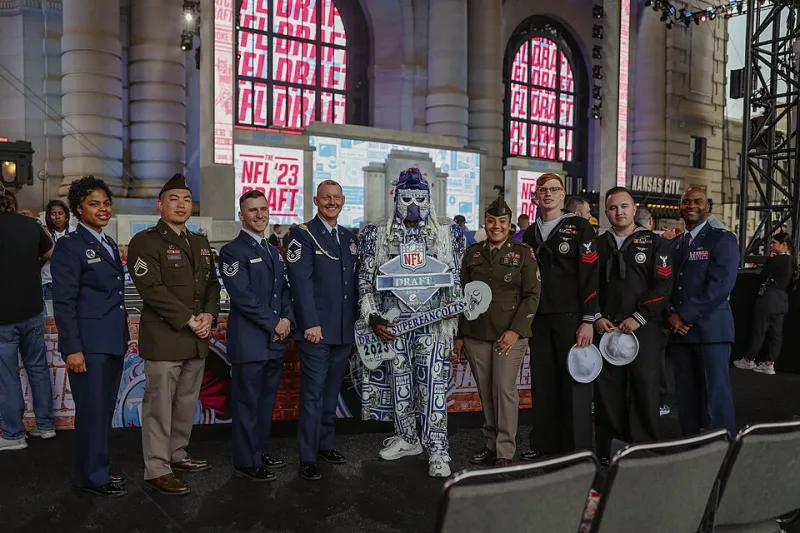
Photo: Cpl. Alexis Moradian, Public domain, via Wikimedia Commons
Draft day is one of the most intoxicating events in American sports. Teams sit in war rooms with whiteboards full of names and color-coded tiers. Fans pack bars wearing their team's jersey, phones out, ready to post their instant reaction. Analysts debate for weeks in advance about who's going where and why.
And then, sometimes, a franchise calls the wrong name. And everything that follows is a lesson in how organizations either grow — or crumble.
The Bust Doesn't Break You. What Comes Next Does.
Let's be honest: every single NFL franchise has a draft skeleton in the closet. Some have entire graveyards. The Cleveland Browns selected so many busts in the late 2000s and early 2010s that their failures became a punchline for the entire league. The JaMarcus Russell pick in 2007 remains one of the most painful reminders that athletic measurables and actual NFL readiness are two very different things.
But here's what separates the organizations that recover from those moments versus the ones that stay stuck in them: it's not luck. It's process.
The teams that bounce back from catastrophic draft mistakes tend to share a few common traits. They acknowledge the failure quickly instead of doubling down. They adjust their evaluation criteria instead of blaming the player. And critically, they find creative ways to fill the roster void left behind — whether through the trade market, free agency, or by developing late-round gems who were overlooked precisely because everyone was chasing the same flashy prospects.
Case Study: When a First-Round Bust Opens a Better Door
The New England Patriots' ability to absorb draft failures better than almost anyone in football history is well-documented, but it's worth examining why they were so good at it. When high picks didn't pan out, New England rarely panicked in free agency and overpaid to compensate. Instead, they trusted their developmental system, leaned on scheme flexibility, and targeted undervalued players in trades — often acquiring guys other teams had given up on.
That philosophy produced some remarkable stories. Players who arrived in New England with damaged reputations or limited roles elsewhere suddenly thrived in a system that maximized their specific skillset rather than trying to fit a square peg into a round hole.
The lesson isn't that New England had some magic formula for identifying talent. It's that their organizational culture didn't let one bad pick — or five bad picks — destabilize their long-term approach. The draft mistake became a data point, not a disaster.
The Psychology of the Front Office Recovery
There's a real psychological component to draft recovery that doesn't get discussed enough. When a franchise spends a first-round pick on a player who flames out, the front office faces enormous pressure — from ownership, from fans, from the media — to fix the problem immediately. That pressure often leads to the worst possible decisions.
Panicked free agent signings. Blockbuster trades that mortgage future picks. Firing a coach who wasn't the actual problem. These reactive moves are how a single bad draft pick turns into a half-decade of organizational dysfunction.
The franchises that handle bust recovery best are usually the ones with stable ownership and a clear front office hierarchy that insulates decision-makers from short-term noise. The San Francisco 49ers' rebuild under John Lynch and Kyle Shanahan is a solid modern example. They made mistakes early in their tenure — several high picks didn't deliver what was expected — but they maintained roster discipline, kept accumulating picks and young players, and resisted the urge to force things before the team was ready.
The result? Multiple NFC Championship appearances and a team that's been competitive year after year.
Finding the Diamonds in the Dirt
One of the most underappreciated parts of recovering from a draft bust is what happens with the picks that came after the mistake. Teams that successfully rebound from big misses often do so by striking gold in the middle and late rounds — not because they got lucky, but because their evaluation process forced them to get smarter.
When you can't rely on a franchise cornerstone you thought you'd drafted, you start looking everywhere else. You watch more film on Day 3 prospects. You give developmental players longer looks in training camp. You become more creative with scheme to make average athletes look better than their measurables suggest.
Some of the most impactful players in recent NFL history were afterthoughts on draft day. The teams that found them weren't always the smartest rooms in the league — but they were often the most desperate, and desperation born from draft failure has a funny way of producing innovation.
What the Worst Draft Classes Teach Us
There's genuine value in studying the franchises that never recovered from their draft blunders. The pattern is usually consistent: the team identifies the bust, panics, and then makes a series of increasingly aggressive moves trying to compensate — each one digging the hole a little deeper.
Roster construction becomes reactive rather than strategic. Draft capital gets traded away for quick fixes that don't fix anything. Coaching staffs get cycled through faster than they can install a system. And the culture of the organization shifts from building something sustainable to just trying to survive the current news cycle.
The teams stuck in that loop aren't bad at football. They're bad at organizational resilience. And in a league where every team is going to miss on draft picks — because every team does, every single year — resilience might be the most important front office trait of all.
The Takeaway for Every Fan Watching Draft Night
Next time your team calls a name and your timeline erupts with skeptical takes, remember: the pick matters, but the response matters more. Championships aren't built in a single draft. They're built over years of evaluating, adjusting, developing, and yes — recovering from the picks that didn't work out.
The teams holding trophies in February almost always have at least one high-profile draft mistake somewhere in their recent history. What they also have is an organization that looked at that mistake, learned something real from it, and kept building anyway.
That's the part of the draft story that doesn't trend on social media. But at PartaiGoal, we know every play matters — including the ones that happen in a war room on a Thursday night in April.