The Backup Steps Up: How Injury-Forced Lineups Accidentally Unlocked Championship Runs

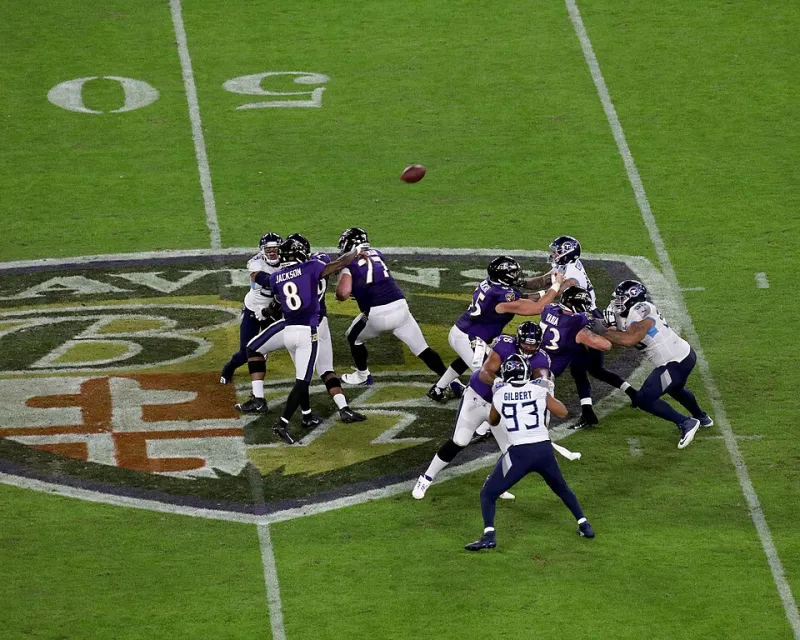
Photo: Cramerwiki, CC0, via Wikimedia Commons
Nobody wants to see a star go down. The collective groan that rolls through a stadium when a key player limps off the field is one of sports' most universal sounds. And yet — and this is something coaches and analysts quietly acknowledge more than they probably should — some of the most important discoveries in team sports history happened because someone had to play who wouldn't have otherwise.
Forced rotations are sports' great accidental laboratories. When a team loses a cornerstone player, the depth chart gets reshuffled, roles get redefined, and coaches are suddenly running experiments they never would have greenlit under normal circumstances. Sometimes those experiments fail spectacularly. But sometimes — just sometimes — they reveal something that was sitting right there all along, completely invisible because there was never any reason to look.
The Starter You Never Knew You Had
Every team carries players who exist in a kind of professional limbo. They're good enough to be on the roster, not quite shiny enough to be in the starting lineup conversation. They practice hard, stay ready, and spend most of their career defined by what they might be rather than what they are.
Injuries change that math overnight.
When a starter goes down, the backup gets thrown into the fire without a safety net. There's no gradual introduction, no carefully managed workload. It's just: you're up, good luck, let's go. And occasionally — more often than the conventional wisdom would suggest — that player rises to the moment in a way that permanently changes how the coaching staff sees them.
What's fascinating is that this isn't purely about individual talent finally getting its shot. It's also about system fit. A backup who's been learning the system for two or three years sometimes understands the scheme in ways that the high-profile starter — who was often brought in specifically to be a certain kind of player — doesn't. The backup was built by the system. The starter was inserted into it.
When Losing Changes Your Spacing
One of the most counterintuitive things that happens when teams lose key players is that their spacing and movement patterns can actually improve. This sounds crazy until you think about it.
Star players command attention. Defenses game-plan around them. Offenses run through them. When that player is absent, the defense suddenly has to honor multiple threats it was previously ignoring, because those role players are now getting real minutes and real looks. The whole competitive geometry of the game shifts.
Coaches who are flexible enough to recognize this and lean into it — rather than just trying to replicate what they had before — are the ones who occasionally stumble onto something special. Instead of running the same plays with a less talented version of their star, they rebuild the offense around what the new lineup actually does well. That kind of adaptability is rare, but when it happens, it can produce results that outlast the injury itself.
The Defensive Scheme Nobody Planned
Injuries don't just create offensive opportunities. They force defensive reinventions that sometimes turn out to be upgrades.
A team loses a traditional linebacker and suddenly has to deploy a smaller, quicker player in that role. Facing an opponent that week, the coordinator decides to use that player's speed in coverage in ways they never would have tried with the original starter. It works. The opponent is unprepared for it. The coordinator files that away.
By the time the original starter returns, the coaching staff has a new wrinkle in their defensive package that defenses haven't had time to study. That wrinkle might win them a playoff game two months later. None of it happens without the injury forcing the experiment.
This is the kind of thing that gets buried in the footnotes of championship retrospectives, but it's genuinely significant. Some of the most memorable defensive performances in recent postseason history were built on schemes that only existed because a depth player forced a coaching staff to get creative.
The Mental Shift Nobody Talks About
There's a psychological dimension to injury-forced lineup changes that doesn't get nearly enough attention. When a backup steps up and plays well, it doesn't just help the team on the field — it changes what the team believes about itself.
Suddenly the narrative shifts from we lost our best player to wait, we might actually be deeper than we thought. That's not a small thing. Confidence is contagious in locker rooms. A team that discovers unexpected depth doesn't just gain a player — it gains a certain fearlessness. The pressure that was concentrated on a few stars gets distributed across a broader group, and sometimes that distribution makes the whole unit more resilient.
You see this play out in the playoffs, where the ability to absorb adversity matters as much as raw talent. Teams that have already navigated an injury crisis mid-season often handle late-game pressure better, because they've already proven to themselves that they can function without their security blanket.
What Coaches Learn That They Can't Unlearn
Here's the lasting impact that rarely makes headlines: the best coaches never fully go back to the old way after a successful injury-forced rotation.
They might reinsert the starter when they return, but they've now seen something they can't unsee. The backup gets more meaningful snaps. The new wrinkle stays in the playbook. The spacing adjustment that worked gets baked into the base offense. The team emerges from the injury period not just intact, but subtly evolved.
The franchises that win consistently — the ones that seem to reload rather than rebuild — are often the ones with coaches who treat adversity as information. Every injury is a forced experiment. Every forced experiment is a potential discovery.
And every once in a while, that discovery is the thing that carries a team all the way to the end.
The Play That Mattered Most
At PartaiGoal, we believe every play matters — including the ones made by guys whose names weren't on the pregame marquee. The backup who steps into the spotlight under the worst possible circumstances, and somehow thrives, is one of sports' most genuinely compelling stories.
Because it's not just about talent. It's about preparation meeting opportunity, coaches being flexible enough to see what's in front of them, and teams discovering that their ceiling was higher than anyone realized — including themselves.