Gone at the Half: The Third-Quarter Black Hole That's Quietly Swallowing NFL Games
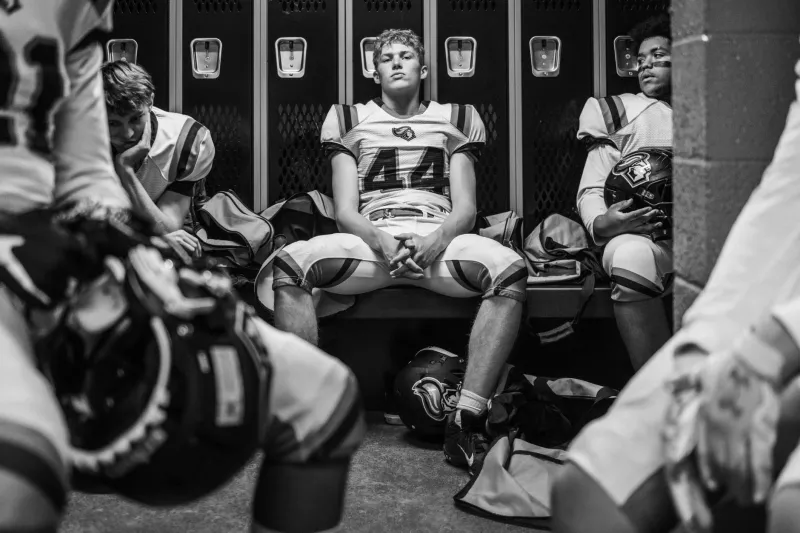
Picture this. Your team goes into the locker room at halftime with a two-score lead. The defense looked sharp, the offense was clicking, and the crowd was loud. Then the second half kicks off, and somehow — almost like clockwork — everything stalls. The opponent scores first. A three-and-out follows. A turnover. Suddenly it's a one-possession game, and Twitter is already melting down.
Welcome to the third quarter. The NFL's most underrated, most overlooked, and arguably most decisive fifteen minutes of football.
The Quarter Nobody Talks About
Fans obsess over fourth-quarter comebacks. Analysts break down two-minute drills with surgical precision. Coaches get roasted for clock management in the final minutes. But the third quarter? It barely gets a mention — and that's exactly why it matters so much.
Look at the scoring splits across a typical NFL season and something jumps out immediately. Teams consistently score fewer points in the third quarter than in any other frame. We're talking about a measurable, repeatable pattern that shows up year after year. It's not random variance. It's a structural feature of the modern game, and the teams that understand it are the ones still playing in January.
According to aggregated scoring data from recent NFL seasons, the third quarter produces roughly 15 to 20 percent fewer points per drive than the first quarter — and the gap widens further when you isolate teams that entered halftime with a lead. In other words, the teams who should be pressing the gas are the ones most likely to take their foot off it.
Why Halftime Is a Trap Door
There's a psychological concept called "halftime inertia," and while it's not an official term in any sports science textbook, every veteran coach knows exactly what it looks like. A team builds momentum in the first half, goes in feeling good, and then spends the first five minutes of the third quarter doing absolutely nothing with it.
Part of that is physical. Players are warm but not sharp. The body has cooled slightly during the 12-to-15 minute break. Muscle memory needs a play or two to fully re-engage. But the bigger culprit is mental.
Coaching staffs spend halftime adjusting. The problem is, so does the other sideline. And when both teams come out with new wrinkles, the team that was winning often has more to lose psychologically. There's a subtle shift from "attack" to "protect," and defenses smell it immediately.
The trailing team, meanwhile, has nothing to lose. They come out swinging. That aggression is contagious, and before you know it, the team that had all the answers in the first half is suddenly on its heels.
The Data Behind the Disappearing Act
Some teams have made third-quarter struggles practically a brand identity. You've seen it — a squad rolls into halftime up 17, and by the end of Q3 it's somehow tied or down. The box score looks like two completely different games stitched together.
What the numbers reveal is that turnover rate spikes in the third quarter for halftime-leading teams. Offensive tempo slows. Third-down conversion rates drop. And perhaps most damning, red zone efficiency takes a noticeable dip compared to the first half.
One pattern that keeps surfacing is the "opening drive hangover." Teams that score on their opening second-half possession are dramatically more likely to win the game — the win probability swing is significant. But teams that go three-and-out on that first third-quarter drive? They lose at a rate that should terrify every offensive coordinator in the league.
The first possession of the third quarter might be the single most important drive in any NFL game that isn't happening in the final two minutes. Coaches don't talk about it that way publicly, but the data screams it.
The Adjustment Arms Race
Here's the uncomfortable truth for offensive coordinators: your halftime adjustments are being countered in real time. Defensive coordinators have spent the last decade getting sharper, faster, and more creative at diagnosing tendencies. By the time a team has played 30 first-half snaps, a good defensive staff has a working profile on every tendency, formation preference, and personnel grouping.
The third quarter is where that profiling pays off. Defenses come out with targeted adjustments designed to take away whatever worked in the first half. If your offense can't respond with a counter-adjustment — and counter it quickly — you're going to stall.
The elite offenses, the ones that make deep playoff runs, have a specific answer for this. They build in deliberate unpredictability for third-quarter openers. Unusual personnel groupings. Motion-heavy formations. The occasional gadget play early in the half just to reset the defensive keys. It's not about trickery for its own sake. It's about forcing the defense to hesitate, even for half a second, before they can trust their reads.
What the Winners Do Differently
The franchises that consistently weaponize the third quarter share a few traits. First, they're aggressive on the opening second-half possession almost regardless of score. They don't sit on leads in the third quarter — they try to extend them before the fourth quarter even arrives.
Second, their defensive staffs are equally prepared to disrupt the opponent's halftime adjustments. The best defenses don't just react to what the offense shows — they introduce new looks in the third quarter to re-muddy the water before the offense has found its footing again.
Third, and maybe most importantly, their coaching staffs have an internal clock for momentum. They recognize when a third-quarter lull is setting in and they call timeout, make a substitution, or dial up an unexpected play call to interrupt the drift before it becomes a collapse.
That last piece is the hardest to teach and the easiest to take for granted. Momentum management is a skill, and the coaches who have it make it look invisible.
Every Play Matters — Including the Quiet Ones
The third quarter doesn't produce the walk-off touchdowns or the goal-line stands that end up in highlight packages. It doesn't generate the dramatic clock-killing drives that get coaches praised in post-game pressers. It's the part of the game that looks, on the surface, like filler.
But every drive that stalls in the third quarter is a missed chance to bury an opponent. Every turnover that flips momentum in Q3 is a wound that bleeds into the fourth. Every three-and-out that gives the trailing team a short field is a slow-motion disaster in real time.
The teams that figure this out — that treat the third quarter with the same intensity as a two-minute drill — are the ones that tend to be playing meaningful football deep into the winter. The ones that sleepwalk through it keep wondering why their leads never feel safe.
The game doesn't pause when the halftime whistle blows. The third quarter is still football, and in this league, every single play matters.